Most founders who call themselves AI native are running a normal company with a ChatGPT subscription and a Cursor seat. The real ones build differently from the first week. Here are the three tests I run, and the questions I still cannot answer.

I have met more founders who call themselves AI native in the last twelve months than in the previous five years. Most of them are running a normal company with a ChatGPT subscription and a Cursor seat. That is not what the term should mean. The looseness is starting to cost us because a label this loose cannot be priced, and if you cannot price something, you will get it wrong. So let me be precise about what I am looking for. An AI-native founder builds a company that would not exist in its current shape without AI as a core architectural choice. The model sits at the structural core of the company. Without it, the product doesn't exist, the team has no leverage, and the whole operation collapses. Everything else is downstream of it. I now run three tests when I meet a founder. Product, team, distribution. They are blunt, and they have held up.
Test 1: Does the product survive without the model?
Strip AI out of the stack. Is there still a company? Is it still venture scale? If the answer is yes, just slower and with more people, it is a feature company. That can be a very good company, but it isn’t what I mean by AI native.
The clearest case I have seen recently is a founder building in the legal services space. Her company is not an AI tool for lawyers. It is a legal product that, before 2023, would have taken 40 attorneys to deliver. It now takes four attorneys and a model layer doing the work of the other 36. The product is the output. The model is load-bearing. Remove it, and there is no product.
Test 2: The team shape looks wrong, and that is the point
An AI native team looks wrong on a spreadsheet. The ratios are off. There are more operators than engineers. There are fewer people than the revenue would predict. A 3-person team is doing work that used to take 30, and we have not worked out what that does to compensation, equity splits, or how these companies scale past their first $10M in revenue.
I don't have a clear answer here. I have seen the shape. I have not seen enough exits to know whether it holds at scale or breaks predictably. If you run a team like this and have a view, I want to hear it.
A 3-person team doing the work of 30 is the new shape. Most VCs are still pricing it as they did with the old one.
Test 3: Distribution looks like media, not sales
This is the test most investors miss, and the one I am still calibrating myself. AI-native distribution looks more like media than SaaS sales. The founders I am most interested in are not running outbound playbooks. They are building an audience, publishing in the open, and treating that audience as an asset that compounds.
This memo is partly my own experiment in that. We are a venture firm. We could buy our way to founder attention. Instead, we are trying to earn it: useful writing, every other week, in a format founders actually read. It is a small thing. It is also a signal about what I think will matter for the companies we back.
What this changes for how we invest
The diligence cannot be lifted from the SaaS playbook. The cost structure is different, so the unit economics are different. The moats have moved, so the defensibility question is different. The team is smaller, so the round should probably be smaller too. We have spent a year running a different process for these companies, and I am still finding things we got wrong last cycle.
This is part of why we built Growth Factory the way we did. We wanted a firm that thinks like an operator, with real depth in the categories where AI is changing the actual work, sized for the leaner companies that this technology now makes possible. The claim is not that AI changes everything. The claim is that AI changes enough that firms built for the last wave will be miscalibrated for this one.
What I have not figured out
I want to be honest about the open problems. I'm not sure how to underwrite team durability when the team is three people. I do not know the right ownership target in a company that goes from zero to $20M in two years with eight employees. I have ideas. I have working answers. I do not have conviction in either yet. If you have thought about this from the cap table side, I want to be wrong with you.
If you are building this, tell me
If you are building something that fails test 1, 2, or 3, I want to know. Tell me what you are building and what the stripped-out version would look like. I will tell you what I am seeing on my side.
This is the most asymmetric bet I see in venture right now. The gap between the label and the real thing is wide. I do not think it stays wide for long.
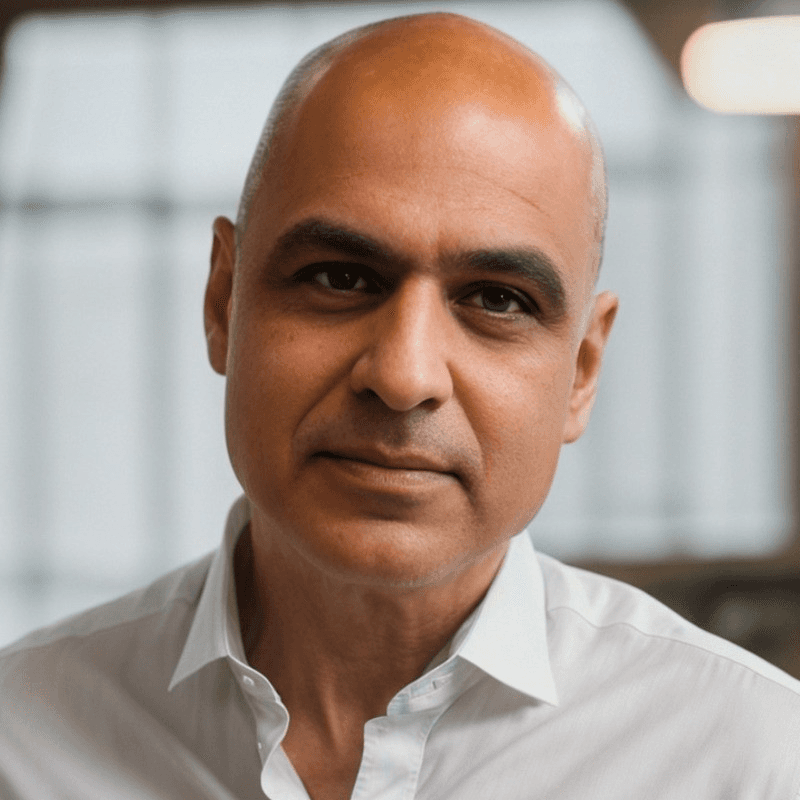
Ali Mackani
Reach Out
We’d love to hear from you.

Stay connected with insights, opportunities, and updates from our ecosystem.